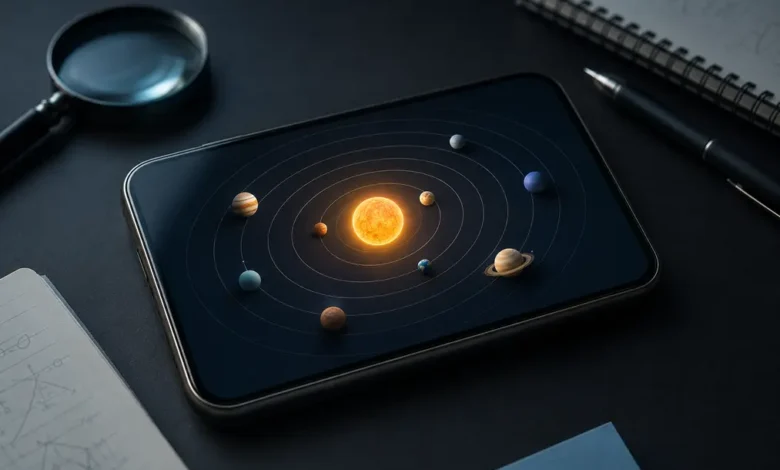
If you have searched for snap planets after seeing a planet badge on Snapchat, you are probably trying to understand what the symbol means and where you stand in another person’s Snapchat friendship list. The feature behind the term is officially called Friend Solar System by Snapchat.
The concept is straightforward: Snapchat uses a miniature solar-system design to represent positions in a user’s Best Friends list. Snapchat says Best Friends are people you Snap and Chat with the most, and the Friend Solar System assigns those positions to planets ranging from Mercury to Neptune.
There is an important distinction, however. A Snapchat planet is an indicator of a position in Snapchat’s Best Friends system. It should not automatically be interpreted as a measurement of how much someone likes you or how strong your real-world friendship is.
Here is what the feature actually means, based on Snapchat’s own documentation.
What Are Snap Planets?
“Snap planets” is an informal way of referring to Snapchat Planets, the Friend Solar System feature available through Snapchat+.
When Snapchat’s Solar System feature is being used, a person’s Best Friends positions are represented by eight planets. Snapchat’s official support page lists Mercury, Venus, Earth, Mars, Jupiter, Saturn, Uranus and Neptune.
The closer the position is to the beginning of the planetary sequence, the higher the corresponding Best Friends position.
In practical terms:
| Planet | Best Friends position |
|---|---|
| Mercury | #1 |
| Venus | #2 |
| Earth | #3 |
| Mars | #4 |
| Jupiter | #5 |
| Saturn | #6 |
| Uranus | #7 |
| Neptune | #8 |
The important point is that these are Snapchat ranking positions, not a statement about the scientific characteristics of the planets themselves.
What Is Snapchat’s Friend Solar System?
Snapchat calls the feature Friend Solar System.
According to Snapchat Support, a Snapchat+ subscriber can see a Best Friends badge with a gold ring on a friend’s Friendship Profile. Tapping the badge shows which planet the user occupies in that friend’s Solar System. Snapchat explains that each planet represents a different position in the friend’s Best Friends list.
This means the feature answers a specific question:
“Where am I in this person’s Snapchat Best Friends ranking?”
It does not provide a complete picture of the person’s social life, and it should not be treated as a formal ranking of real-life friendships.
Snapchat separately explains that users can have up to eight Best Friends. Those Best Friends are people they Snap and Chat with the most, and the list is updated regularly.
Snapchat Planets in Order
The planet order follows eight familiar planets from our solar system.
Mercury — #1
Mercury represents the first position in the Friend Solar System.
If you appear as Mercury in someone’s Solar System, Snapchat’s system is indicating that you occupy the #1 position among that person’s Best Friends.
This is a ranking within Snapchat’s Best Friends system. It does not necessarily mean that the person considers you their closest friend in every aspect of life.
Venus — #2
Venus represents the second Best Friends position.
A Venus position means you are ranked second within that person’s eight Best Friends positions.
Earth — #3
Earth corresponds to the third position.
Like the other planets, its meaning comes from its position in the Friend Solar System rather than from any special emotional meaning attached to the real planet Earth.
Mars — #4
Mars represents the fourth Best Friends position.
The feature therefore gives users a visual way to understand where they stand within the eight-person Best Friends group.
Jupiter — #5
Jupiter is the fifth position in the Snapchat planet sequence.
A user appearing here is within the eight Best Friends positions but is ranked below the four positions represented by Mercury through Mars.
Saturn — #6
Saturn represents the sixth position.
It is still part of the eight Best Friends positions that Snapchat describes, but it is farther down the ranking than Mercury, Venus, Earth, Mars and Jupiter.
Uranus — #7
Uranus represents the seventh Best Friends position.
The position is determined by the person’s place within the relevant Best Friends ranking, rather than by anything related to the astronomical planet Uranus.
Neptune — #8
Neptune represents the eighth position in the Friend Solar System.
It is the last of the eight planet positions listed by Snapchat for this feature.
How Does the Snapchat Planet System Work?
The basic system is connected to Snapchat’s Best Friends feature.
Snapchat says Best Friends are the people you Snap and Chat with the most. You can have up to eight Best Friends, and the list is updated regularly.
Snapchat also explains that metadata associated with Snaps and Chats is used to support features such as Best Friends, Friend Emojis and Streaks. This metadata can include information such as the date, time, sender and receiver, while Snapchat says the metadata itself does not contain the content of the Snap or Chat.
However, users should be careful with claims about a precise secret formula.
Snapchat’s public Friend Solar System documentation does not provide a numerical scoring system showing exactly how many points a Snap, Chat, Streak or other activity contributes to a planet position. Therefore, websites claiming to know an exact weighting system should not automatically be treated as authoritative.
The safest interpretation is that the planet represents your position within Snapchat’s Best Friends system, which Snapchat describes in terms of how frequently you Snap and Chat with people.
Do You Need Snapchat+ for Snap Planets?
Yes, the Friend Solar System is listed by Snapchat as a Snapchat+ feature. Snapchat’s official Snapchat+ documentation includes Solar System among its premium features.
Snapchat+ is the company’s subscription service that provides premium, experimental and pre-release features. Snapchat also notes that subscription pricing can vary depending on country and device, so users should check the price displayed inside Snapchat rather than relying on an old price published by a third-party website.
That is particularly important when reading older Snapchat Planets articles because subscription offerings and prices can change.
How Do You View Your Snapchat Planet?
Snapchat’s official instructions explain that a Snapchat+ subscriber can use the Friend Solar System through a friend’s Friendship Profile.
The process described by Snapchat is:
- Open a friend’s Friendship Profile.
- Look for the Best Friends badge with its gold ring.
- Tap the badge.
- The Solar System shows the planet position you occupy in that person’s Best Friends list.
Snapchat also says the Solar System is off by default for first-time subscribers. It can be turned on through Snapchat+’s feature-management settings and can also be turned off.
If the feature is not appearing, it is therefore worth checking whether Solar System has been enabled rather than assuming the account or application is malfunctioning.
Can Your Snapchat Planet Change?
Your position can change because Snapchat says Best Friends are updated regularly.
That means a person who occupies one planet position at one point may occupy another position later.
It is important not to interpret every movement as proof that someone has intentionally ignored or rejected you. A Best Friends ranking reflects activity within Snapchat’s system. It is not a direct statement of someone’s feelings.
Snapchat does not publicly provide a fixed timetable that guarantees exactly when every planet position will change. Therefore, claims that the system always recalculates at a specific hour, every day, or according to a precise published formula should be treated cautiously unless Snapchat confirms them.
Can Someone See Their Planet in Your Solar System?
Snapchat’s official explanation specifically says that a Snapchat+ subscriber can tap the Best Friends badge on another person’s Friendship Profile to see which planet they are in that person’s Solar System.
This is different from saying that everyone can freely browse another person’s complete Best Friends list.
Snapchat separately states that people may see if they are among your Best Friends, but other people cannot see your complete Best Friends list.
That distinction matters.
The Solar System feature gives a person information about their position in another user’s Best Friends system; it should not be confused with publicly displaying the entire ranked list.
Why a Snapchat Planet Is Not a Measure of Real Friendship
This is one of the most important points that many quick Snapchat Planets guides overlook.
Suppose someone appears as Neptune. That does not prove the friendship is weak in real life.
Likewise, appearing as Mercury does not prove that two people are each other’s closest friends outside Snapchat.
The planet reflects a position in Snapchat’s interaction-based Best Friends system. Real friendships involve factors that an app ranking cannot fully measure, including face-to-face relationships, family connections, shared experiences and communication outside the platform.
For that reason, Snapchat planets are best understood as a feature showing Snapchat interaction rankings, rather than a definitive friendship score.
Why Are There Eight Snapchat Planets?
Snapchat’s Best Friends system supports up to eight Best Friends, and its Friend Solar System maps those eight positions onto eight planets.
The sequence is:
Mercury → Venus → Earth → Mars → Jupiter → Saturn → Uranus → Neptune
The planet names therefore provide a memorable visual structure for the eight positions.
There is no need to interpret the planets according to their actual astronomical distances, temperatures or physical properties. Their purpose here is to represent positions in Snapchat’s social feature.
A Note About Online “Snap Planets” Calculators
Search results contain numerous independent websites offering Snapchat Planets calculators, ranking tools and explanations.
These can be useful for understanding the terminology, but they are not the same thing as official Snapchat documentation.
A calculator cannot reveal Snapchat’s private internal ranking algorithm simply by asking you to enter a number. If a third-party website claims to calculate someone’s exact Snapchat ranking without access to the person’s Snapchat account data, that claim should be treated carefully.
For accurate information about how the feature works, Snapchat’s own support documentation is the stronger source.
Frequently Asked Questions
What are Snap Planets?
Snap Planets is an informal term for Snapchat’s Friend Solar System feature. It represents positions in a user’s Best Friends list with eight planets, from Mercury through Neptune.
What is the number one Snapchat planet?
Mercury represents the first position in the eight-planet Friend Solar System.
What is the number eight Snapchat planet?
Neptune represents the eighth position.
Are Snapchat Planets part of Snapchat+?
Yes. Snapchat lists Solar System among its Snapchat+ features.
Can Snapchat planets change?
They can change because Snapchat says Best Friends are updated regularly.
Does Neptune mean someone is a bad friend?
No. Neptune simply represents the eighth position in the Friend Solar System. It should not be treated as a judgment about a person’s real-life friendship.
Can I turn the Solar System off?
Yes. Snapchat says the Solar System feature can be toggled on or off through Snapchat+ feature management.
Conclusion
“Snap planets” refers to Snapchat’s Friend Solar System, a Snapchat+ feature that turns the platform’s Best Friends positions into a visual sequence of eight planets.
Mercury represents position one, followed by Venus, Earth, Mars, Jupiter, Saturn, Uranus and Neptune at position eight. Snapchat says Best Friends are the people a user Snaps and Chats with the most, and those positions are updated regularly.
The most useful way to understand the feature is therefore simple: your Snapchat planet indicates your position within another person’s Best Friends system on Snapchat. It does not provide a complete measurement of a real-world friendship.
Because Snapchat does not publicly disclose every detail of the ranking formula, users should also be cautious about websites claiming to know an exact algorithm or guaranteed timetable for planet changes.
For the most reliable information, Snapchat’s own support documentation should remain the starting point whenever the feature changes.